

There is no Global South market. There are dozens. The singular is the first error in every imported playbook: one framework, one regional hub, flown into countries that share almost nothing operationally.
For most of the last century, the story of how a great company gets built was written somewhere else. The capital was northern. The playbook was northern. The consultants arrived with a deck and left with a fee.
That has stopped being true, and the numbers stopped agreeing with it first. The growth moved south. Then the invention moved with it.
Kenya put money on a feature phone with M-Pesa years before the north thought to try, because the branch network it would have replaced was never built. Brazil produced Nubank against banking that existed but was priced punitively and granted selectively, and then produced Pix, where the central bank did the same job at national scale. India built Jio and collapsed the price of mobile data for a continent, and built Aadhaar to give identity to people the system had never registered. Nigeria produced Dangote, which made the cement, then the fertiliser, then the fuel, in a country that had been exporting crude and importing petrol. Indonesia produced GoTo, which had to build payments and logistics before it could sell anything, because neither existed at the scale an archipelago needs.

These were answers to problems the north had never had to solve. And they travel: Cemex and JBS both reached global scale by buying Northern businesses from the South, and Embraer has sold aircraft into Northern fleets for decades.
Why the plural matters. Indonesia is not Brazil. Romania is not Nigeria. What a market will accept, who has to be in the room, how long a decision takes, what a promise is worth: all of it is local, and none of it is knowable from a slide. We learned the differences by operating in them, one market at a time, over more than two decades. Our people have run businesses in these places, carried the operational risk themselves, and know what it costs to deliver.
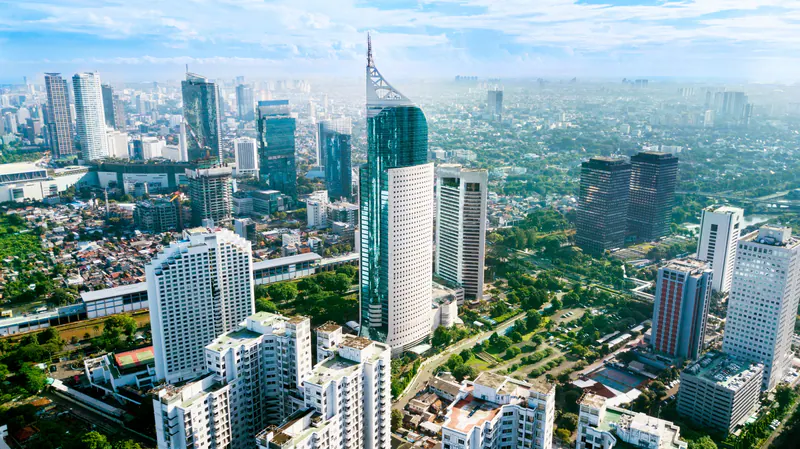
What we mean by a giant. A giant is not the biggest company in a market, the most valuable, or the fastest growing. Those are things anyone with a terminal can count, and they are all backward-looking. A giant is built against a constraint rather than a preference. Something was missing or broken, and the company exists because of it. It lays the infrastructure it needs instead of assuming the rails are there, and those rails become the moat. It treats the north as a market rather than a destination. And it runs technology it chose, not technology it inherited.
The test cuts both ways, which is what makes it useful. Dangote passes and is the archetype. Embraer passes, state-founded and privatised. The protected national champion fails, however large: dominant at home, sustained by procurement, never having exported a capability. Large is not the same as giant.
The four constraints. Absence: it was never built. Power, telecom, logistics, payments, refining. The company creates the missing layer and the rails become the moat. Extraction: it exists, priced punitively. Banking, insurance, telecom, aviation. The company breaks the price from a structurally lower cost base. Fragmentation: thousands of unconnected units. Retail and FMCG distribution, pharmacy, agricultural offtake. Distribution becomes the real asset. Exclusion: the system works, but a large population is formally locked out of it, with no identity, no credit history, no title. The company builds the qualification layer that lets them in, and usually needs a regulatory partner to do it.

Where we operate. Europe, Latin America, Southeast Asia and West Africa, with Indonesia a major operating market. Paris, London, Bucharest, Sao Paulo, Jakarta and Singapore are where our people are.
The next giants will emerge from the Global South. We are the growth engine behind them.